All-on-4 vs. All-on-6: Which Do You Actually Need?
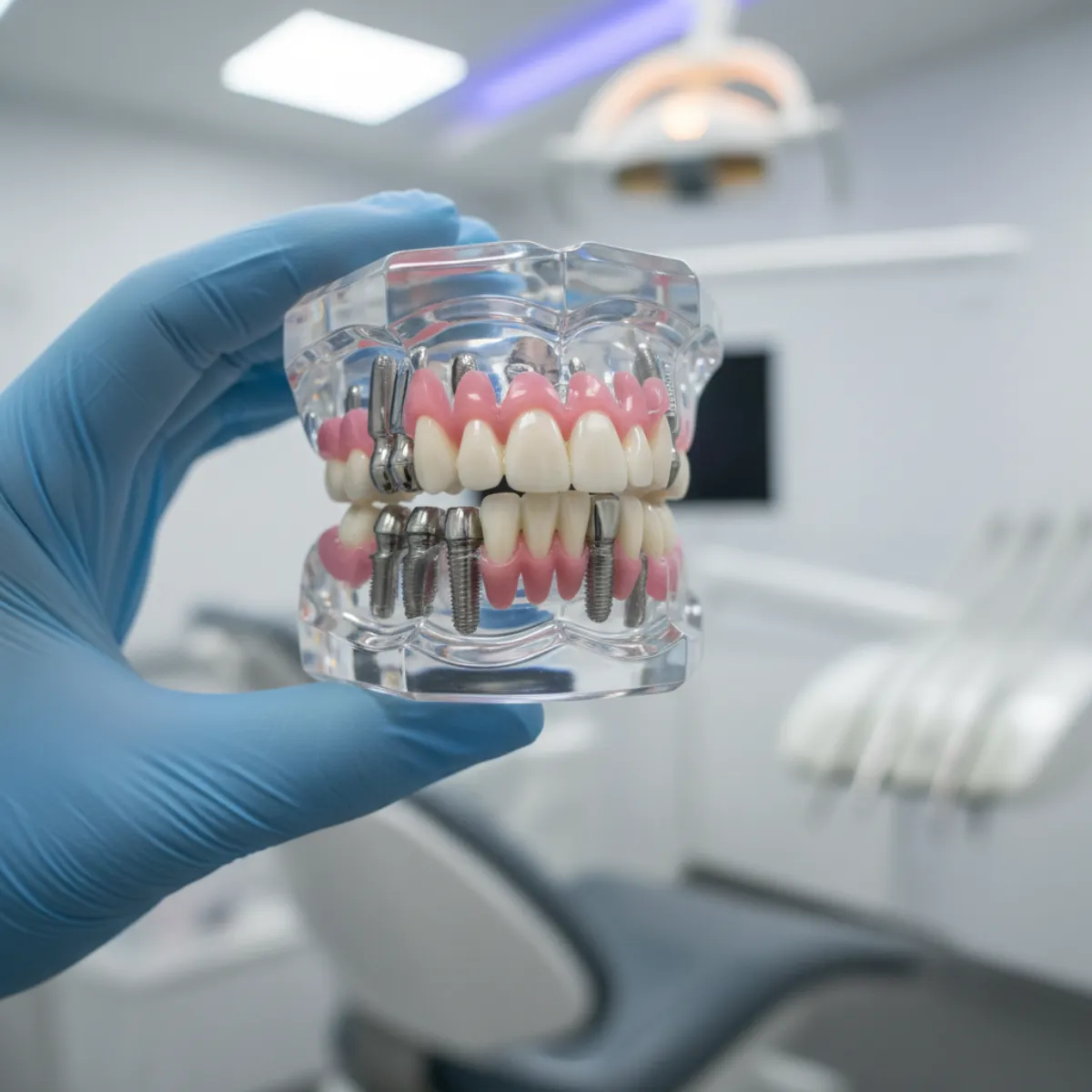
All-on-4 and All-on-6 do the same job — a full set of fixed teeth on implants — but with four or six implants per jaw. More implants isn’t automatically better; here’s how the two compare on cost, stability and who each one suits.
The core difference: four implants vs six
Both are full-arch, implant-supported fixed bridges. All-on-4 anchors the arch on four implants, with the back two angled to make the most of available bone. All-on-6 adds two more implants per arch for extra anchorage. That’s the whole difference — everything else (the surgery, the prosthesis, the timeline) is broadly similar.
Cost difference: roughly 15–20% more
Two extra implants per arch — plus the additional components and chair time — typically raise the price about 15–20%. On a US arch averaging ~$15,000, that’s roughly $2,000–$3,000 more; abroad, where per-arch prices start near $8,000, the absolute gap is smaller. Notably, the material of your final teeth usually moves the total more than the two extra implants do — see acrylic vs zirconia.
Stability and the upper-jaw question
The argument for All-on-6 is force distribution: six implants share chewing load across more anchor points, which can matter in the upper jaw, where bone is softer and where research shows implant failures cluster (one cohort found most losses in the posterior maxilla). Some surgeons therefore favor six implants up top and are comfortable with four on the lower jaw, which has denser bone.
That said, All-on-4 has a long track record and works well for many patients — about 94.8% implant survival at up to 10 years in the largest cohort (with the usual caveat that the often-quoted 99.8% figure is conditional on passing 24 months). More implants can add stability, but they also need more bone and cost more.
How to decide
- Let your bone decide, not a brochure. A CBCT scan shows how much bone you have and where. That — not a default preference — should drive the number of implants.
- Ask about the upper vs lower jaw separately. It’s common to use a different number on each.
- Weigh cost against your case. If four implants are clinically sufficient for you, paying for six buys little. If your bone or bite calls for six, it’s worth it.
- Get the plan in writing, including how many implants, what material, and whether the final prosthesis is included.
Once you know which design your dentist recommends, compare the full cost breakdown and decide where to have it done. And remember the implants usually outlast the teeth on top — so also read how long All-on-4 implants last.
Medical & financial disclaimer: This article is for general information only and is not medical or financial advice. Prices are market estimate ranges, not quotes. Consult a licensed dentist and verify any clinic independently before treatment.